
Red Foot Haulers provides container shipping within Canada — inland truck haulage of shipping containers point-to-point between two land addresses, or port pickup of a box that has already been released. Most requests are standard 20ft and 40ft dry boxes; a 40ft high-cube is quote-only. Every quote is built from your container size, weight, distance, and site access, since we operate Canada-only and don't publish a flat national rate.
What We Move — and What This Page Is Not
"Container shipping" gets used loosely online, and it's worth being precise about which service you're actually looking for. Red Foot Haulers handles the inland trucking leg — moving a container that already exists, by road, between two points inside Canada. We are not an ocean carrier, a customs broker, or a company that sells or rents you a container. The table below lays out how inland container haul compares to the other things people mean when they search "container shipping."
| Service | What it actually is | Does Red Foot Haulers provide this? |
|---|---|---|
| Inland container haul (this page) | Trucking a shipping container, loaded or empty, point-to-point or as port pickup of a released box | Yes — this is our service |
| Ocean FCL / LCL freight | Booking vessel space, port handling, and international ocean transport of cargo | No — this is a different service entirely; we don't book vessels or pay ocean freight |
| Portable moving containers (Cubeit, BigSteelBox, etc.) | Rent-a-box household moving pods dropped at your home and picked up later | No — different business model, different equipment |
| Buying a used sea-can | Purchasing a shipping container outright for storage or resale | No — we haul containers, we don't sell them |
If you already know you need a 20ft box moved rather than a 40ft, our breakdown of 20ft vs 40ft container transport covers how size affects the truck, the route, and what to expect on the quote. We do not advertise refrigerated, open-top, or flat-rack containers.
What Your Quote Depends On
There's no published per-kilometre or per-container rate for container shipping within Canada, because too many variables move the number in either direction. Instead of guessing at a figure, here's what actually drives your quote and which way each factor pushes it.
| Factor | How it affects the quote |
|---|---|
| Distance and distance tier | Short intra-provincial moves price differently than long interprovincial hauls; distance is usually the single biggest driver |
| Container size — 20ft vs 40ft vs high-cube | Larger and taller boxes need different handling and can affect route legality on certain corridors |
| Loaded vs empty | A loaded container changes actual weight and sometimes securement requirements versus an empty box |
| Actual weight vs legal axle limits | Weight distribution against legal axle limits can require different routing or equipment confirmation |
| Origin and destination access | Level ground, swing room for a truck and trailer, and a truck-legal road in and out all affect feasibility and price |
| Season | Winter routes, road bans, and weather can change timing and routing decisions |
| Whether a lift is needed at either end | Crane or forklift needs at pickup or delivery are confirmed on the quote and factored in accordingly |
For most customers, distance and site access dominate the final number more than container size does. A short move with poor truck access at one end can end up costing more attention than a longer haul between two easy, level, drive-straight-in sites. For a deeper walkthrough of how these factors interact, see our full container shipping cost Canada breakdown.
How an Inland Container Move Works
Moving a shipping container isn't quite like moving a car or a pallet of freight — the box itself is the cargo, and getting a truck safely to both ends matters as much as the highway haul in between. Here's the order of operations for a typical Red Foot Haulers container move.
1. Quote Request
We start with your origin address, destination address, container size (20ft, 40ft, or high-cube), whether it's loaded or empty, an estimated weight, and photos of both the pickup and delivery sites. The photos matter more than people expect — they're often what lets us confirm feasibility without a site visit.
2. Access Confirmation
Before we commit to a date, we confirm whether both locations are truck-accessible: level ground for the container to sit or be lifted, enough approach and swing room for a straight-truck or tractor-trailer combination to maneuver, and a truck-legal road connecting the site to the highway network. A container sitting in a backyard behind a narrow gate is a very different job than one on a paved commercial lot.
3. Carrier and Trailer Match
We match the container to a carrier with the right trailer for its size, weight, and both sites. We do not operate a dedicated chassis, tilt-deck, twist-lock, or side-loader fleet. Empty 20ft and 40ft boxes often go on a flatdeck. A port pickup or a heavy loaded box may need a different trailer — confirmed on the quote. If a crane or forklift is required at either end, that is identified on the quote rather than assumed.
4. Pickup
The truck arrives at the origin, the container is loaded or secured onto the trailer, and paperwork is confirmed before departure.
5. Highway Haul
The container travels by road to its destination. Route, timing, and any seasonal considerations are factored in based on the distance and provinces involved.
6. Delivery
The container is delivered and placed or unloaded at the destination site, again depending on what access and lift equipment were confirmed for that end of the move.
How a Port Pickup Works
Port pickup is a different job from a point-to-point move between two land addresses, but we quote both. The box has to be released before a truck can take it. We do not book the ocean voyage, pay port fees, or clear customs.
1. Release
The customer, the broker, or the ocean line gets the container released from the terminal. Until that happens, there is nothing for a truck to pick up.
2. Quote
Send origin, destination, size (20ft, 40ft, or high-cube), loaded or empty, estimated weight, and photos of both sites. We quote from those facts.
3. Booking and pickup window
After the booking questions and the contract, the assigned carrier and the customer arrange the pickup. We do not hold a standing terminal account or book the gate appointment for you.
Ports, Corridors and Coverage
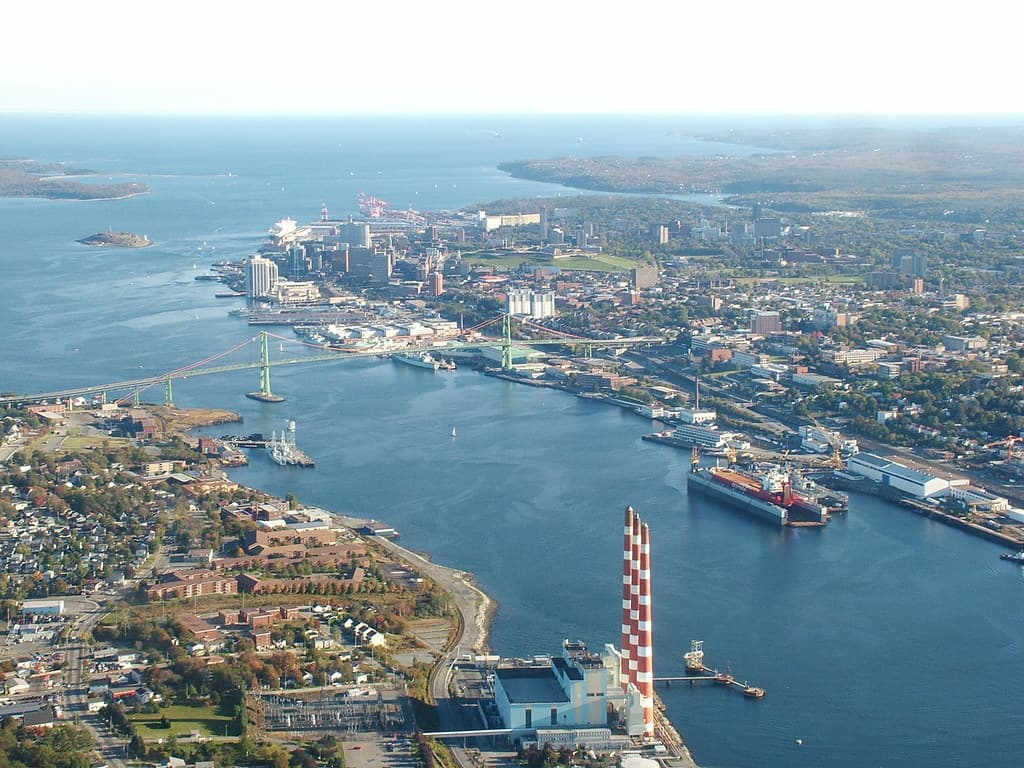
Red Foot Haulers covers inland container hauling across Canada, connecting origins and destinations across provinces rather than operating out of a fixed set of depots. Major Canadian ports and other Canada-only locations are quoted by inquiry — we do not publish a named-terminal list. A common scenario is a container that has arrived on Canada's east or west coast and needs to move inland from there — for that kind of move, our page on Halifax and Vancouver port pickup and port-to-port inland haul covers what's involved in the trucking leg once a container is released and truck-accessible.
One of the longer and more frequently asked-about routes is coast to coast. If you're specifically moving a container from Vancouver to Halifax (or the reverse), our dedicated Vancouver to Halifax container shipping page covers that corridor in detail — distance, timing considerations, and what affects the quote on a move that length.
Not every city pair has its own dedicated page yet. A one-off search for something like Toronto to Vancouver container shipping doesn't currently point to a published corridor page on our site — that doesn't mean we can't quote it, it just means the route isn't broken out separately the way Vancouver–Halifax is. If you don't see your specific corridor listed, the fastest path is simply requesting a quote with your origin and destination; our container shipping cost Canada page also walks through how distance tiers generally affect pricing regardless of which two cities are involved.
Preparation Checklist
Quotes move faster — and are more accurate — when we get complete information up front. Before you request a quote, it helps to have the following ready:
| Information | Why we need it |
|---|---|
| Exact container size (20ft, 40ft, or high-cube) | Determines route feasibility and equipment confirmation |
| Empty or loaded status | Affects actual weight and how the container needs to be secured |
| Estimated weight | Checked against legal axle limits for the route |
| Photos of both the pickup and delivery sites | Lets us assess ground conditions, approach room, and road access without a site visit |
| Any time constraints or target dates | Helps us plan the haul and flag any seasonal routing considerations |
| Whether the container is yours or a line-owned unit | Affects who's responsible for the box and any handling considerations at either end |
We don't publish a fixed list of lock, plate, or permit requirements as a condition of booking — every move is different, and we confirm those specifics from your container's details and site photos rather than applying a blanket rule.
Why Ship With Red Foot Haulers
Red Foot Haulers has hauled containers within Canada since 2016, with more than 700 reviews averaging 4.9 out of 5. Every move is covered by cargo insurance, and you're working with one accountable hauler from quote to delivery — not a lead-generation marketplace that re-sells your job to the lowest bidder. That distinction matters more than it sounds: with a marketplace, you often don't know who's actually showing up with the truck. With Red Foot Haulers, the company you quote with is the company that hauls your container.
If you're still comparing options, our guide on how to choose a container shipping company in Canada walks through what to check before booking with anyone — us included. When you're ready, you can request a quote directly at /quote/other-shipping with your origin, destination, container size, weight, and site photos.
Shipping a vehicle instead of a container? See our separate car shipping Canada service.
Frequently Asked Questions
Do you ship containers within Canada?
Yes. Red Foot Haulers hauls shipping containers inland within Canada. We quote from your origin, destination, container size, weight and site access rather than a published national rate.
Is this ocean freight or inland trucking?
Inland trucking. We do point-to-point moves between two land addresses and port pickup of a released box. We do not book the ocean voyage, pay port fees, or clear customs. The customer, broker, or line gets the box released; after we book, the carrier and customer arrange pickup.
What container sizes can you move?
Standard 20ft and 40ft dry boxes are the default. A 40ft is quoted from its actual weight — we do not promise every loaded 40ft. A 40ft high-cube is quote-only because the extra height can go oversize on the deck. We do not advertise reefers, open-tops, or flat-racks.
How much does container shipping within Canada cost?
There is no single published rate. The quote depends on distance, 20ft vs 40ft, loaded vs empty, actual weight, and whether both sites can take a truck. See the cost page for the full driver list, then request a quote.
Do you ship containers to or from the United States?
No. Red Foot Haulers moves containers within Canada only. Cross-border ocean or truck moves involve CBSA clearance and different paperwork we do not handle.