
Red Foot Haulers built this page to answer the shipping FAQs Canada customers ask most often before booking a car, RV, boat, or piece of equipment for transport inside Canada. It is deliberately general: the how-to, preparation, and rate detail for each vehicle class lives on its own hub page. Read the answers here first, then jump to the hub that matches what you're shipping.
Frequently Asked Questions About Shipping Across Canada
This is the canonical FAQ for Red Foot Haulers customers moving a vehicle anywhere within Canada. If you want method-specific detail — open versus enclosed trailers for a classic car, tow considerations for a fifth-wheel, cradle setups for a boat — those live on the dedicated hub pages linked in the "More Detail by Vehicle Type" section below. The answers here stay general on purpose so they never contradict the specifics on the vertical hubs.
Frequently Asked Questions
What can Red Foot Haulers ship?
We ship cars and light trucks, RVs and trailers, boats, and heavy equipment door-to-door within Canada. Each vehicle type has its own guide covering the transport method, loading equipment, and preparation steps specific to that class of vehicle. If you're not sure which category your unit falls under, the vehicle-type links further down this page point you to the right guide, and you can always confirm the details when you request a quote.
Do you ship outside Canada?
No. Red Foot Haulers operates domestic Canadian transport only. Every lane we quote starts and ends inside Canada. If you're importing a vehicle you bought in the United States, we can only handle the leg once it has already cleared customs and is sitting at a Canadian address — the cross-border and customs portion is not something we arrange.
Is my vehicle insured in transit?
Yes. Every shipment moves under the carrier's cargo insurance policy. Ask for the certificate of insurance before your pickup date and compare the per-unit coverage limit against your vehicle's actual value. This matters most for higher-value RVs, boats, and equipment, where the standard per-unit limit may be lower than what your unit is worth and a rider or additional coverage may be worth arranging before the truck arrives.
How long does shipping take?
It depends on distance, season, and vehicle type. Short provincial moves can be a few days; a coast-to-coast move is often one to two weeks once you account for driver hours-of-service rules, weigh-station stops, and route conditions. You receive a transit window on your quote, not a guaranteed hour of arrival, because road and weather conditions can shift a delivery day in either direction. For the ranges that apply to specific corridors, the vehicle hubs and the service-area page below carry more detail.
Can you ship a vehicle that does not run?
Yes, with the right equipment on the truck. A non-running vehicle can usually still be loaded with a winch if it rolls, steers, and brakes. If it doesn't do all three, we need to know at quote stage so we can dispatch a truck with a wheel-lift or forklift attachment instead of a standard ramp trailer. Tell us the honest condition — rolls, steers, brakes, yes or no on each — when you request a quote, and we'll match the equipment to it.
Can I leave personal items in the vehicle?
Keep contents to a minimum. Cargo insurance covers the vehicle itself, not personal belongings packed inside it, so loose items in a car trunk, RV cupboards, or a boat cabin are carried at your own risk. Excess contents can also add weight that affects how the unit sits on the trailer, so the lighter you keep it, the smoother the load.
How do I get a quote?
Use the quote form with both pickup and delivery addresses plus your vehicle's year, make, model, and running condition, or call 1-800-492-7713 directly. Either way, you'll receive a written quote before anything is booked — we don't take a deposit against a verbal number. The written quote is what confirms your transit window and the terms of the move.
What payment methods do you accept?
Typically INTERAC e-Transfer, or whatever arrangement is stated on your written quote. A deposit is what actually books the truck and locks in your pickup window; the balance follows the payment schedule set out on that same quote. If you have a preferred method, raise it when you request the quote and we'll confirm what's possible in writing.
What Shapes Your Quote (and Why We Point You to the Hubs)
We don't publish a flat rate on this page because cars, RVs, boats, and equipment each price differently, and the figure that matters is the written quote for your specific move. What we can do is lay out the factors that go into it, so you know what information to have ready and why the same lane can vary from one shipment to the next. For the full pricing discussion on any single vehicle class, follow through to that vehicle's hub.
| Quote Driver | How It Moves the Quote |
|---|---|
| Total distance | The single biggest factor. Longer hauls cost more overall, and how the distance splits across the carrier's schedule affects when a truck can be assigned to your lane. |
| Route type | A busy corridor with regular traffic is easier to fill and schedule than a one-off run to a remote area, which affects both timing and cost. |
| Transport type | Open transport is the standard option. Enclosed transport protects against road debris and weather and is worth considering for a classic car, a motorcycle, or a boat with exposed electronics. |
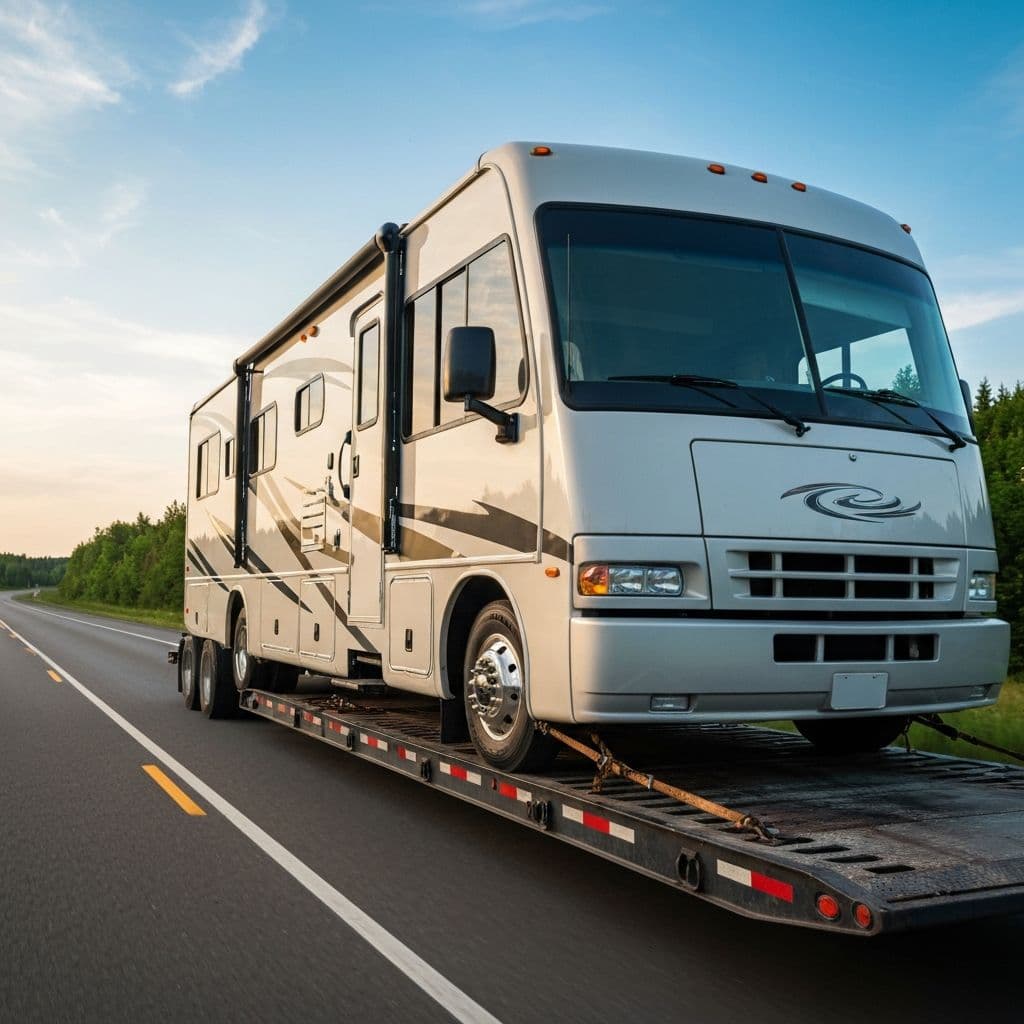
| Vehicle size and weight | A full-size Class A motorhome or a wide piece of heavy equipment takes up more deck space and axle weight than a sedan or a small trailer, which determines the truck configuration required. |
| Running condition | A unit that rolls, steers, and brakes loads faster on standard equipment. A non-running unit needs a winch, wheel-lift, or forklift, which narrows the trucks that can carry it. |
| Seasonality | RV and trailer demand peaks around the fall and spring travel seasons, and winter mountain and prairie routes can add time due to chain-up requirements and weather delays. |
| Remote pickup or delivery | A rural acreage, a gravel cottage road, a marina with tight clearance, or a farm gate off a secondary highway can require a smaller vehicle or an added stop, handled differently than a straightforward city-to-city move. |
These same drivers apply whether you're shipping a sedan, a fifth-wheel, a runabout, or an excavator — only the weights and equipment requirements change. For RV-specific detail, including how trailer length and axle count factor in, see our RV shipping Canada hub, which is also where our RV hauling rates Canada and trailer transport Canada guidance lives.
What to Have Ready Before You Ask
The fastest quotes come from the most complete requests. Having the right details in hand before you use the form or call saves a round of back-and-forth and lets us confirm equipment and timing in one pass.
| Detail | Why It Matters |
|---|---|
| Pickup and delivery addresses | Full addresses, not just cities, so we can judge access, clearance, and whether a smaller vehicle or added stop is needed at either end. |
| Year, make, and model | Determines size, weight, and the deck space and equipment the unit needs. |
| Running condition | Whether it rolls, steers, and brakes decides whether standard ramps or a winch and wheel-lift are required. |
| Timing flexibility | A flexible pickup window is easier to schedule than a fixed date and often improves how quickly a truck can be assigned. |
| Any special handling | Low ground clearance, oversize dimensions, exposed electronics, or a preference for enclosed transport all change the equipment we assign. |
Every shipment follows the same booking-to-delivery sequence outlined on our shipping process page — quote, deposit, dispatch, pickup, transit updates, delivery — and the provinces and corridors we service regularly are mapped on the where we ship in Canada page.
More Detail by Vehicle Type
This FAQ stays general so it doesn't conflict with the specifics on our vehicle hubs. If you're shipping a sedan, pickup, or SUV, the loading equipment, prep checklist, and open-versus-enclosed tradeoffs are covered on our car shipping Canada hub. Motorhomes, travel trailers, and fifth-wheels — including axle-count and tow considerations — are covered on the RV shipping Canada hub, which also holds our RV hauling rates Canada detail. Powerboats, sailboats, and personal watercraft, along with cradle and trailer requirements, are covered on the boat shipping and transport Canada hub. For the full map of provinces and corridors we service regularly, see where we ship in Canada, and for a step-by-step walkthrough of what happens between booking and delivery, see our shipping process page.