
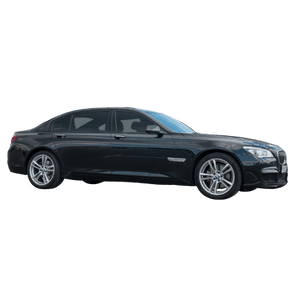
Red Foot Haulers ships non-running and inoperable cars door-to-door across Canada's busiest corridors — Toronto to Calgary, Vancouver to Toronto, Montreal to Edmonton, and the Maritimes into Ontario — with typical transit times of 4 to 8 days depending on distance, route, and season. Our carriers are fitted with hydraulic winches built for vehicles that can't drive themselves onto a trailer.
Open car shipping is $1.20–$1.40/km for 500–1,500 km, $0.80–$0.90/km for 1,500–3,000 km, and $0.60–$0.70/km for 3,000 km and over. Enclosed is $2.80–$3.30/km, $1.60–$2.30/km, and $1.10–$1.20/km on the same tiers. Short hauls under 500 km are quoted.
Shipping a Non-Running Car in Canada
Yes — we ship non-running cars door-to-door anywhere within car shipping Canada lanes cover. What matters for booking isn't the reason the car doesn't run — dead battery, blown engine, seized transmission, collision damage — it's whether the vehicle still rolls, steers, and brakes. Those three functions determine what equipment shows up at your driveway, so we ask about them at quote time.
Non-running shipping is a routine part of the job. Estate vehicles, project cars bought at auction, post-accident moves, and cars with a dead battery all move through the same winch-equipped fleet we use for operable vehicles.
Roll, Steer, Brake — What We Need to Know
A car that won't start isn't automatically a difficult load. A dead-battery car that still rolls freely, turns its wheels, and stops when pushed is a straightforward winch job. A car with a seized engine, a locked-up caliper, or wheels that won't turn is a different piece of equipment entirely. Telling us the truth about all three at booking — not just "it doesn't run" — keeps the pickup from turning into an abort where the driver arrives, can't safely load, and has to reschedule.
| Condition | What it means | Equipment typically needed |
|---|---|---|
| Rolls, steers, and brakes normally | Dead battery, bad starter, or empty fuel tank — the drivetrain and controls still function manually | Standard multi-car carrier with a winch and tow strap; loads like any operable vehicle, just pulled instead of driven |
| Rolls and steers, but brakes are compromised or absent | Brake lines cut, calipers seized open, or no hydraulic pressure — the car moves but won't stop reliably | Winch with a controlled, slow pull; wheel chocks and additional tie-down points; extra time at loading and unloading |
| Does not roll, does not steer, or wheels are locked/missing | Seized transmission, collision damage bending a wheel or axle, frozen bearings, or wheels removed entirely | Flatbed or specialized equipment, sometimes a forklift or crane assist rather than a standard carrier winch slot |
If you're not sure which category your vehicle falls into, push it a few feet on level ground before you call. That single test answers most of the question.
How Winch Loading Works
For a car that rolls, steers, and brakes, the process is simple. The carrier backs its trailer up to the vehicle, hooks a steel winch cable to the frame or a tow point, and pulls the car up the ramps under winch power while someone steers — from inside if it's safe, or with a steering wheel clamp from outside if it isn't. Once on the deck, it's secured with the same straps and chains used on every other vehicle in the load.
The part that surprises people is the pickup window. Operable vehicles can often be loaded in ten minutes. Non-running vehicles take longer at both ends — positioning the trailer, running the winch slowly, and securing a car that can't be nudged by hand. That's why we ask for flexible pickup windows on non-running loads rather than a fixed hour.
One thing worth being clear about: non-running status by itself does not require enclosed transport. Open carriers with winches handle the overwhelming majority of inoperable vehicles we move. Enclosed is a separate decision — usually about vehicle value or weather protection.
What Your Quote Depends On
The published per-km band above is a range, not a single number, because no single number reflects a market where the same route varies by vehicle and week. Here's what moves your number up or down.
| Factor | Effect on price |
|---|---|
| Distance / distance tier | Longer hauls cost more in total but less per kilometre — short intra-provincial moves carry a higher per-km rate than long cross-country lanes |
| Open vs. enclosed transport | Enclosed costs more; fewer vehicles fit per trailer and the handling is more specialized |
| Vehicle size, weight, and clearance | Larger, heavier, and low-clearance vehicles reduce how many fit on a trailer and complicate loading, pushing price up |
| Whether it runs, rolls, and steers | Fully operable is cheapest to move; rolls/steers/brakes adds modest cost for winch time; locked wheels or a seized drivetrain adds more for specialized equipment |
| Season | Peak snowbird and moving-season months push prices up on high-demand lanes; winter can add cost on remote or weather-affected routes |
| Pickup-window flexibility | A flexible window lets us slot your vehicle into a truck already running the route; a rigid date can force a dedicated or partially empty run |
| Distance from a main highway | Rural or hard-to-access locations add time and sometimes require a smaller secondary vehicle, increasing cost |
| How regularly carriers run the lane | Established, high-traffic corridors are cheaper because trucks are already going that way; thin or one-off lanes cost more |
For most non-running quotes, three factors dominate: the distance tier, whether the vehicle rolls/steers/brakes or needs flatbed equipment, and how flexible you can be on pickup date.
Wrecked, Salvage and Project Cars
Collision-damaged, salvage-titled, and project vehicles come with extra considerations. Fluids matter — a cracked oil pan, ruptured coolant reservoir, or leaking fuel line needs disclosure before pickup so the driver can position the vehicle correctly and protect others on the load. Protruding metal from collision damage can snag straps or nearby vehicles and needs flagging, sometimes padding, before loading. Missing wheels change the loading method entirely, since a car on jack stands can't be winched like a rolling vehicle.
Title and registration status is separate from transport. We move vehicles within Canada based on the pickup and delivery details provided — we don't verify salvage branding, lien status, or ownership. Questions about registering a salvage or rebuilt vehicle are between you and your provincial licensing authority.
Preparing a Non-Running Vehicle
A little preparation before the truck arrives prevents almost every delay we see on non-running pickups.
- Photograph all existing damage — every panel, from several angles, in daylight, dated.
- Disclose any fluid leaks — oil, coolant, transmission fluid, or fuel. It changes how and where the car is positioned on the trailer.
- Remove loose parts and personal items — carriers aren't responsible for loose cargo, and it can shift during transport.
- Confirm wheels and tires are present and inflated — or tell us in advance so a dolly or alternate equipment can be arranged.
- Note the battery's condition — a dead battery affects whether steering can be unlocked during the winch pull; flag it if disconnected or removed.
- Have keys and fobs ready — the driver typically needs the key to release the steering lock and shift out of park.
- Check access to the storage location — a winch truck needs a straight, reasonably clear pull path; give advance warning of tight garages, locked gates, or steep driveways.
Other popular routes
Beyond non-running transport, we run regular service to car shipping Vancouver and car shipping Edmonton corridors, and for higher-value or weather-sensitive vehicles, see our page on enclosed car shipping Canada wide. For a full overview of lanes and equipment, start at car shipping Canada.
Frequently Asked Questions
What is the best way to transport a non-running car?
Book a carrier with a winch and tell them whether the car rolls, steers and brakes. Most non-running cars move on open transport; enclosed is a separate choice for value or weather, not a requirement of the non-running condition itself.
Can you ship a car that does not roll or steer?
Yes, but it needs different handling — often a flatbed or specialized equipment rather than a standard multi-car carrier winch slot. Disclose this at quote time so the right truck is assigned.
What is the cheapest way to ship a car within Canada?
Open transport on a multi-vehicle carrier, booked with a flexible pickup window, on a lane carriers already run regularly. Enclosed trailers carry fewer vehicles per load; a rigid pickup date can force an empty slot; an established lane means the truck is already going. Terminal-to-terminal helps only when a terminal is genuinely convenient.
Is my car insured while it is being transported?
Yes. Every vehicle moves under the carrier's cargo insurance for the whole trip. Ask for the certificate and check the per-vehicle limit against what your car is actually worth — especially for enclosed loads. Your own policy generally covers the vehicle as an owned asset, not the carrier's handling of it.
Can Red Foot Haulers ship my car to or from the United States?
No — Red Foot Haulers ships within Canada only. Bringing a vehicle in from the US involves customs clearance, Registrar of Imported Vehicles (RIV) registration and a federal inspection, all outside domestic transport. Contact the CBSA or RIV for that process.