
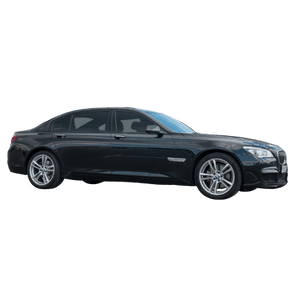
Enclosed car shipping between Vancouver, Edmonton and Calgary moves classic, exotic and high-value vehicles inside a fully covered trailer on the three lanes connecting these Western Canadian cities. Vancouver–Calgary runs 971 km (2–3 days), Vancouver–Edmonton runs 1,159 km (2–4 days), and Edmonton–Calgary runs 300 km (1–2 days). This page covers the enclosed method specifically — for general open transport in any one of these cities, see our Vancouver, Edmonton or Calgary pages.
Enclosed is $2.80–$3.30/km, $1.60–$2.30/km, and $1.10–$1.20/km on the same tiers. Open car shipping is $1.20–$1.40/km for 500–1,500 km, $0.80–$0.90/km for 1,500–3,000 km, and $0.60–$0.70/km for 3,000 km and over. Short hauls under 500 km are quoted.
Enclosed Car Shipping Between Vancouver, Edmonton and Calgary
These three cities form a tight western triangle, and it's the corridor where enclosed transport gets requested most often in our network — partly because it's home to a disproportionate share of Canada's collector-car and exotic-car owners, and partly because winter conditions on the Coquihalla and mountain passes make covered transport genuinely useful. For enclosed transport across the rest of the country, our enclosed car shipping hub covers every corridor we run, and the car shipping Canada hub is the better starting point for questions not tied to the enclosed method.
When Enclosed Transport Is Worth It
Most vehicles moving between these three cities do not need enclosed transport. Open transport is what the large majority of cars, trucks and SUVs ship on, and it's entirely appropriate for a daily driver, a used car bought online, or a company vehicle relocating with an employee. Enclosed earns its place in a narrower set of situations: classic and collector cars where paint condition and originality carry real value; exotics where a stone chip is a measurable loss; freshly restored or repainted work where the clear coat hasn't fully cured; low-clearance cars that risk scraping on an open deck's ramps; and anything moving through a Prairie or mountain winter, where road salt, sand and gravel spray are a real and constant risk.
| Exposure | Open transport | Enclosed transport |
|---|---|---|
| Weather (rain, snow, wind) | Direct exposure for the full trip | Fully shielded |
| Road salt and gravel spray | Direct exposure, especially in winter | Shielded |
| Dust and road grime | Accumulates over multi-day hauls | Minimal |
| Minor cosmetic risk from loading | Standard ramp loading, low risk for most vehicles | Often liftgate-loaded; lower risk for low-clearance cars |
| Visibility to other traffic/theft-of-opportunity | Vehicle is visible in transit | Vehicle is concealed in transit |
| Carrier availability | Widely available on all three lanes, year-round | Fewer carriers, tighter scheduling especially in winter |
The Three Western Lanes
All three pairings can move on enclosed trailers, but the distances and driving conditions differ enough that they're worth looking at separately.
| Route | Distance | Typical transit time | Notes |
|---|---|---|---|
| Vancouver–Calgary | 971 km | 2–3 days | Crosses the Coquihalla and the Rockies; winter routing constraints apply |
| Vancouver–Edmonton | 1,159 km | 2–4 days | Longest of the three, also crosses the Rockies via mountain highway |
| Edmonton–Calgary | 300 km | 1–2 days | Flat prairie highway, short enough to move quickly with few weather-related delays |
Edmonton–Calgary is short enough that it typically moves on the next available truck heading in that direction. The two Vancouver lanes are a different story: both climb through mountain terrain, which is the single biggest reason enclosed scheduling looks different from open scheduling on this corridor. For city-level questions, see car shipping Vancouver, car shipping Edmonton and car shipping Calgary.
Mountain Passes and Why They Matter More for Enclosed Loads
Both Vancouver lanes climb through the Coquihalla and, depending on routing, Rogers Pass — sections with real elevation gain, exposed alpine stretches, and weather that can shift from clear to whiteout in an hour between October and April. This matters more for an enclosed trailer than an open one: an enclosed trailer has a much larger side profile, so crosswinds push harder against it, and it runs heavier once loaded, which affects traction and braking on the same grades. The practical consequence is fewer enclosed carriers willing to run these lanes in deep winter, so book meaningfully further ahead than you would for an open load. A flexible pickup window, rather than a fixed date, is the single most useful thing you can do to avoid a delay on these two lanes.
What Your Quote Depends On
The published per-km band above is a range, not a single number, because no honest one exists — the same run can vary meaningfully depending on the vehicle, the season and the pickup address. What we can publish is exactly which factors move your number and in which direction.
| Factor | Direction of effect | Why |
|---|---|---|
| Distance and distance tier | Longer distance, higher total, but lower cost per km | Fixed costs (loading, positioning, admin) are spread over more driving on longer hauls |
| Open vs enclosed | Enclosed costs more | Fewer trailers, more careful handling, often single or few-vehicle loads instead of multi-car decks |
| Vehicle size and weight | Larger/heavier vehicles cost more | Takes up more deck space and adds fuel cost; may limit how many others share the load |
| Ground clearance | Very low clearance can raise cost | May require liftgate loading or specific ramp angles, narrowing which trailers can take it |
| Runs, rolls and steers | Non-running vehicles cost more | Requires winching or a forklift/skate at both ends instead of driving on and off |
| Season and weather | Winter, especially on mountain lanes, costs more | Fewer trucks running, chain-up time, weather delays and thinner enclosed capacity |
| Pickup window flexibility | Fixed hard dates cost more than a flexible window | A flexible window lets the carrier fit your vehicle into an existing route |
| Distance from a main highway | Remote pickup or delivery costs more | Adds deadhead miles and time that isn't part of the main route |
For an enclosed move on this triangle, three factors usually dominate: whether you've chosen enclosed over open at all, the season, and how flexible your pickup window is. Get those three right and the rest are comparatively minor adjustments.
What to Check Before Booking Enclosed
- Cargo insurance limit: ask for the certificate and check the per-vehicle limit against what your car is actually worth. A policy that comfortably covers a daily driver may fall well short of an exotic's replacement value.
- Hard-sided or soft-sided trailer: hard-sided trailers offer more protection against impact and weather; soft-sided (curtain-side) trailers are lighter but offer less rigidity.
- Liftgate or ramp loading: a liftgate lifts the vehicle level and is safer for low front splitters and lowered cars; a steep ramp can catch a low-clearance vehicle. Ask before booking, not on pickup day.
- Dedicated or multi-vehicle load: a dedicated load means your vehicle is the only one on the trailer; a multi-vehicle load may share space and involve additional stops.
Preparing Your Vehicle for Pickup
- Fill the fuel tank to roughly a quarter — enough to load and unload, not enough to add unnecessary weight.
- Remove toll transponders and take out all personal belongings; carriers generally won't accept liability for items left inside.
- Disable the alarm so it doesn't trigger during loading, transit stops or unloading.
- Photograph the vehicle from every angle, with timestamped close-ups of any existing dents, chips or scratches, before the driver arrives.
- Fold in or remove aftermarket spoilers, roof racks and other add-ons that could affect clearance inside the trailer.
- Confirm the tires hold air and the parking brake releases; either problem at pickup can delay loading.
The condition report the driver fills out at pickup is the document any later claim gets settled against. Walk it with the driver, agree on what's already there, and keep a copy before the vehicle leaves your sight.
Frequently Asked Questions
Is enclosed car shipping worth it?
For most vehicles, no — open transport is what the large majority ship on and is entirely appropriate. Enclosed earns its cost for classics, exotics, freshly restored work, low-clearance cars that cannot load safely on an open deck, and high-value vehicles moving through a winter where road salt and gravel spray are a genuine risk.
How long does enclosed transport take between Vancouver and Calgary?
Typically 2–3 days for the 971 km run, the same driving as an open load. What differs is scheduling: fewer enclosed carriers run these lanes, so the wait for a slot is usually longer than the trip itself. Book further ahead than you would for open transport.
Can an enclosed trailer handle a low-clearance car?
Usually, and it is one of the better reasons to choose it. Ask specifically whether the trailer loads by liftgate or by ramp — a liftgate lifts the vehicle level and is the safer option for a low front splitter, while a steep ramp can catch one. Confirm this before booking rather than on the day.
Is my car insured while it is being transported?
Yes. Every vehicle moves under the carrier's cargo insurance for the whole trip. Ask for the certificate and check the per-vehicle limit against what your car is actually worth — that matters most for enclosed loads, which is usually where the higher-value vehicles are. Your own policy generally still covers the vehicle as an owned asset, but not the carrier's handling of it.
Can Red Foot Haulers ship my car to or from the United States?
No — Red Foot Haulers ships within Canada only. Bringing a vehicle in from the US involves customs clearance, Registrar of Imported Vehicles (RIV) registration and a federal inspection, all of which sit outside domestic transport. Contact the CBSA or RIV directly for that process.
Other popular routes: Vancouver to Calgary car shipping, Vancouver to Edmonton car shipping. Shipping a motorcycle, boat or other vehicle type instead? Start at car shipping Vancouver for options in that city.