
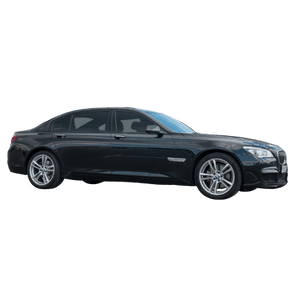
Shipping a car from Toronto to Edmonton covers roughly 3,411 km and typically takes 6–10 days in carrier transit. The route runs north out of the GTA, across Northern Ontario, over the Prairies, and into Edmonton on the Yellowhead — with the Lake Superior stretch being the one section that occasionally adds days rather than the distance itself.
Route at a Glance
| Distance | 3411 km |
| Estimated Transit Time | 6–10 days |
| Route | Highway 400 north out of the GTA, then Highway 17 across Northern Ontario along Lake Superior, into Manitoba and across the Prairies on the Trans-Canada, then Highway 16 (Yellowhead) north-west into Edmonton. |
Open transport on this 3,411 km lane is $0.60–$0.70/km (about $2,050–$2,400). Enclosed is $1.10–$1.20/km (about $3,750–$4,100).
Shipping a Car from Toronto to Edmonton
At 3,411 km, this is one of the longest domestic corridors a carrier runs in Canada, and it's also one of the more established ones — enough vehicles move between the GTA and Edmonton that carriers plan around this lane rather than treating it as a special request. Most shipments land inside the 6–10 day window, with the low end reserved for vehicles that load onto a carrier already heading west on schedule, and the high end covering winter departures, remote pickup addresses, or a driver working around other customers' delivery windows along the way. This page covers the Toronto–Edmonton pair specifically. If you're shipping a different vehicle type, or want the fuller picture for Edmonton as a destination generally, that's covered separately — this page stays focused on the corridor itself.
The Route
Out of the Toronto area, carriers head north on Highway 400, then pick up Highway 17 for the long haul across Northern Ontario along the shore of Lake Superior. This is the part of the trip that actually determines your delivery window. For hundreds of kilometres — Sault Ste. Marie through Wawa, Marathon, and on toward Thunder Bay — Highway 17 narrows to two lanes with long, genuine gaps between fuel, food, and any kind of roadside service. In good weather it's simply a long, slow stretch. In a winter storm, it's the single most common reason a Toronto–Edmonton shipment runs past its estimated window: Northern Ontario closures happen more often, and last longer, than anything the Prairies or the GTA itself typically produce.
Once the truck crosses into Manitoba, the character of the trip changes completely. The Trans-Canada Highway across the Prairies is flat, straight, well-serviced, and about as predictable as long-haul trucking gets in this country — this section is usually the fastest and least eventful part of the whole route, in any season. From there, carriers pick up Highway 16, the Yellowhead, heading northwest through Saskatchewan and into Alberta for the final approach into Edmonton. Compared to the Superior shoreline, the Yellowhead approach rarely causes delays; by that point the shipment is typically running close to schedule.
Open vs Enclosed Transport
The large majority of vehicles on this lane — daily drivers, SUVs, standard pickups, ordinary sedans — ship on open transport, and that's entirely appropriate for them. Open carriers run this route constantly, they carry more vehicles per load, and there's nothing about a Toronto–Edmonton move that makes open transport risky for a typical vehicle. Enclosed car shipping exists for a narrower set of cases where the vehicle itself, not the route, is the deciding factor.
| Factor | Open Transport | Enclosed Transport |
|---|---|---|
| Weather & road debris exposure | Vehicle is exposed to salt, road spray, and weather for the full 3,411 km | Fully enclosed — no exposure to weather, salt, or debris |
| Vehicles per load | Typically 7–10 vehicles per carrier | Typically 1–4 vehicles per carrier |
| Availability on this lane | Widely available, runs on short notice | Less frequent; may need more lead time to book |
| Typical vehicles | Daily drivers, SUVs, trucks, standard sedans | Classics, exotics, low-clearance sports cars, freshly restored vehicles, high-value cars |
What Your Quote Depends On
The published per-km band above is a range, not a single number, because a Toronto–Edmonton quote genuinely isn't one number — it's built from a short list of variables that move it up or down. Here's exactly what those are and which direction each one pushes.
| Factor | How It Moves the Quote |
|---|---|
| Distance & distance tier | 3,411 km places this in the long-haul tier; longer corridors generally carry a lower effective per-km cost than short regional moves, but the total is naturally higher than a shorter route. |
| Open vs enclosed | Enclosed costs more because fewer vehicles fit per load and equipment availability is tighter — see the comparison above. |
| Vehicle size, weight & ground clearance | Larger, heavier vehicles take up more deck space and reduce how many other vehicles fit on the same carrier; very low clearance vehicles may need specific ramps or equipment. |
| Whether it runs, rolls and steers | A non-running vehicle needs a winch-equipped carrier and more loading time, which affects which trucks can take the job. |
| Season & weather | Winter bookings, especially with Northern Ontario in the forecast, can carry a premium tied to slower transit and higher fuel/route risk for the carrier. |
| Pickup window flexibility | A flexible date lets the carrier slot your vehicle into a truck that's already running this lane; a rigid date may mean paying to secure a dedicated slot. |
| Distance from a main highway | A pickup or delivery address far from Highway 400, Highway 17, or the Yellowhead may require a smaller local truck or an added detour, both of which add cost. |
| Lane frequency | Toronto–Edmonton is a route carriers already run regularly, which generally keeps pricing more competitive than a corridor between two smaller centres. |
For most Toronto–Edmonton shipments, three of these dominate: distance tier (unavoidable at 3,411 km), pickup window flexibility, and whether the vehicle runs. Open vs. enclosed matters, but only for the minority of vehicles where it's actually the right call.
How Long It Takes, and What Changes That
The 6–10 day window is carrier transit time, not the number of hours it would take to drive 3,411 km straight through. Commercial drivers operate under mandated hours-of-service limits, meaning they can't legally drive the whole distance in one or two long shifts the way a personal road trip might. Your vehicle is also usually one of several on the truck, and the driver is picking up and dropping off other customers' vehicles along the way — each of those stops adds time that's already built into the estimate, not a delay on top of it.
On this specific lane, the main thing that widens the window is winter weather over the Highway 17 stretch along Lake Superior — a closure there can add days regardless of how smoothly the rest of the trip is running. Remote pickup or delivery addresses, off the direct highway path, can also add time on either end. The single biggest lever a customer has to narrow the window is a flexible pickup date: giving the carrier a range of two or three days instead of one fixed date makes it far more likely your vehicle loads onto a truck that's already scheduled to run the corridor soon, rather than waiting for one to be arranged specifically around your date.
Preparing Your Vehicle for Pickup
A little preparation before the driver arrives avoids most of the friction that slows down pickup day. Work through this before your scheduled window:
- Fuel level: leave roughly a quarter tank — enough for the driver to load and unload the vehicle under its own power, without carrying extra weight for 3,411 km.
- Toll transponders: remove any 407 ETR or similar transponder so it doesn't get billed or damaged in transit.
- Personal belongings: clear the vehicle out completely. Carrier cargo insurance covers the vehicle, not items left inside it.
- Alarm system: disable it, or leave clear instructions — a system that triggers repeatedly during loading or transit can cause real problems for the driver.
- Photograph existing damage: take dated photos from every angle — front, rear, both sides, roof, wheels — before the driver arrives. This is your baseline if anything needs to be disputed later.
- Aftermarket parts: fold in or remove aftermarket spoilers, roof racks, and antennas that extend beyond the vehicle's normal profile.
- Starting quirks: if the vehicle needs a particular technique to start, or has any known electrical or mechanical quirk, write it down for the driver rather than assuming you'll be there to explain it.
- Tires & parking brake: confirm all four tires hold air and the parking brake releases cleanly — both are needed to load and unload safely.
At pickup, the driver completes a condition report noting the vehicle's existing state before it's loaded. This document — not a memory of what the car looked like — is what any later claim gets settled against, so it's worth taking a few minutes to walk around the vehicle with the driver and agree on it together before it leaves your sight.
Other Popular Routes
Edmonton is a common endpoint for long-haul moves across the country. If you're comparing options, see Vancouver to Edmonton car shipping or Halifax to Edmonton car shipping, or start from our car shipping Canada hub for the full list of corridors we run.
Frequently Asked Questions
How long does it take to ship a car from Toronto to Edmonton?
Typically 6–10 days for this 3,411 km route. That window is carrier transit, not raw drive time — it accounts for mandated driver rest, the other vehicles being collected and dropped along the way, and the pickup window itself. Winter weather widens it; a flexible pickup date usually narrows it.
What is the cheapest way to ship a car within Canada?
Open transport on a multi-vehicle carrier, booked with a flexible pickup window, on a lane carriers already run regularly. Those three together do most of the work: enclosed trailers carry a fraction of the vehicles per load, a rigid pickup date means a carrier may run with an empty slot, and an established lane is one where the truck is already going. Terminal-to-terminal instead of door-to-door helps where a terminal is genuinely convenient to you.
Is car shipping from Toronto to Edmonton available in winter?
Yes, it runs year-round. The variable is Northern Ontario: the Highway 17 stretch along Lake Superior can close in a storm, and that is what widens the delivery window rather than anything at either end. Build a few days of slack into a January or February move and it is rarely a problem.
Can you ship a car that does not run?
Yes. A non-running vehicle needs a carrier with a winch and takes a loading slot that a driveable car would not, so it has to be arranged deliberately rather than added at the last minute. Tell us at booking whether it rolls, steers and brakes — those three determine what equipment the driver brings, and a vehicle that does none of them needs different handling entirely.
Is my car insured while it is being transported?
Yes. Every vehicle moves under the carrier's cargo insurance for the whole trip. Ask for the certificate and check the per-vehicle limit against what your car is actually worth — that matters most for enclosed loads, which is usually where the higher-value vehicles are. Your own policy generally still covers the vehicle as an owned asset, but not the carrier's handling of it, so the two are not interchangeable.
Can Red Foot Haulers ship my car to or from the United States?
No — Red Foot Haulers ships within Canada only. Bringing a vehicle in from the US involves customs clearance, Registrar of Imported Vehicles (RIV) registration and a federal inspection, all of which sit outside domestic transport. Contact the CBSA or RIV directly for that process.
Moving an RV rather than a car? See RV shipping Toronto to Edmonton for tow-away, drive-away and flatdeck options on the same route.