
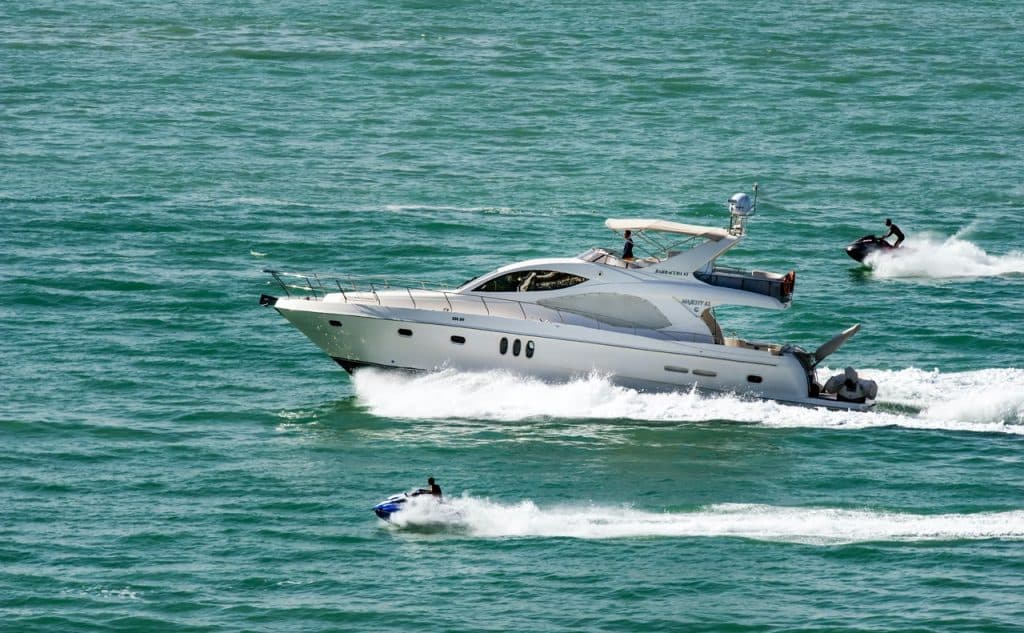
Red Foot Haulers runs boat shipping across Canada, coast to coast, connecting every province from British Columbia to Newfoundland and Labrador. Tow-away costs $2.70–$3.10/km for 500–1,500 km, $1.70–$1.90/km for 1,500–3,000 km, and $1.30–$1.40/km for 3,000 km and over. Flatdeck is $2.60–$3.00/km under 3,000 km and $2.00–$2.10/km past 3,000 km. For very short distances (under 1,500 km), request a quote for a more accurate rate.
Boat Shipping Across Canada
Door-to-door transit typically runs 4 to 10 days depending on distance, ferry crossings, and season. Our busiest lanes run Ontario to British Columbia, Ontario to the Maritimes, and Ontario to Alberta. Tow-away is the method when the boat already sits on a trailer rated for highway speeds. When there's no trailer, or the boat is too tall or wide to tow safely, it rides on a flatdeck or lowboy step-deck instead. Which method applies comes down to two questions: does the boat already sit on a trailer rated for highway speeds, and what is the loaded width once it's strapped down? Red Foot Haulers is a Canada-only, door-to-door hauler — we don't cross into the United States, and every shipment travels under commercial cargo insurance with a condition report completed at pickup and again at delivery.
Because we run lanes in every province continuously, a boat heading from a Georgian Bay marina to a buyer in Kelowna, or from a Halifax yacht club to a new berth in Victoria, is usually filling space in a truck that's already crossing the country rather than a dedicated one-off run. That's a meaningful part of why longer hauls land at a lower per-kilometer rate than regional moves: the fixed cost of a driver, insurance paperwork, and positioning the rig is spread over more kilometres.
How Much Does Boat Shipping Cost?
Boat shipping is priced by method and distance, not a single flat per-kilometer number. The table below is the published card as of August 2026, drawn from completed Canadian moves in the last six months. Live quotes can come in under these bands. Oversize boats — over 25 feet, or over 8'6" loaded width — leave the per-kilometer card and are quoted per route.
| Distance | Tow-away | Flatdeck |
|---|---|---|
| Under 500 km | Quoted | $2.60–$3.00/km |
| 500–1,500 km | $2.70–$3.10/km | $2.60–$3.00/km |
| 1,500–3,000 km | $1.70–$1.90/km | $2.60–$3.00/km |
| 3,000 km and over | $1.30–$1.40/km | $2.00–$2.10/km |
| Oversize (over 25 ft or over 8'6" loaded width) | Quoted per route | Quoted per route |
For very short distances (under 1,500 km), request a quote for a more accurate rate. Tow-away under 500 km is quote-only. Flatdeck under 1,500 km uses the mid-haul floor of $2.60–$3.00/km as a starting point, then we price the actual run.
Applying those bands to published Canada-only route distances gives a sense of scale. These totals are estimates rounded to the nearest $50, not a firm quote — loaded dimensions, marina lifts, ferries, and permits still move the number.
| Lane | Distance | Tow-away | Flatdeck |
|---|---|---|---|
| Halifax–Toronto | 1,801 km | $3,050–$3,400 | $4,700–$5,400 |
| Toronto–Calgary | 3,442 km | $4,450–$4,800 | $6,900–$7,250 |
| Toronto–Vancouver | 4,415 km | $5,750–$6,200 | $8,850–$9,250 |
| Halifax–Vancouver | 5,982 km | $7,800–$8,350 | $11,950–$12,550 |
Shorter regional moves — a marina change within Ontario, or a run from the Maritimes to Quebec — sit in the higher per-kilometer bands because a driver, insurance paperwork, and fuel to position the rig are fixed costs regardless of how far the boat travels. Once a boat crosses the 25-foot mark or needs a loaded width over 8'6", it leaves the per-kilometer card entirely and gets quoted per route based on permits, escort requirements, and the specific highways involved.
Tow-Away vs Flatdeck Boat Transport
The method question usually answers itself once you look at the trailer and the loaded dimensions. Tow-away is the default whenever a boat is already sitting on its own axles, because it needs no crane, no travel-lift, and no forklift at either end — the driver simply hitches up and drives. Flatdeck or step-deck transport comes into play when there's no trailer at all, when the existing trailer isn't rated for highway travel, or when the boat's height on its trailer would make towing unsafe or illegal on certain routes.
| Factor | Tow-Away | Flatdeck / Step-Deck |
|---|---|---|
| Requires a road-worthy trailer | Yes — boat must already be on one | No — boat is loaded onto the truck deck |
| Loading equipment needed | None; hitch and go | Travel-lift, crane, or forklift at pickup and delivery |
| Typical cost | $1.30–$3.10/km by distance | $2.00–$3.00/km by distance |
| Best suited to | Boats already trailered for road use | Boats without a trailer, or too tall/wide to tow |
If the boat and trailer are being shipped together as a package — for example a buyer purchasing both — the requirements shift slightly, since the trailer itself needs to be roadworthy and properly licensed for the province it's travelling through. Our ship a boat and trailer page walks through that specific checklist, including trailer registration, tire condition, and bearing checks, before the transport date is booked. If you don't yet own a trailer, our boat trailers for sale page lists options sized to common hull types.
What Changes Your Price
Beyond the published per-kilometer band, several factors move a quote up or down. Knowing these ahead of time keeps the final invoice matching the estimate.
| Driver | Effect on Price |
|---|---|
| Method (tow-away vs flatdeck) | Flatdeck is usually higher per kilometre on the same distance, because it commits a deck and often a marina lift at both ends |
| Distance | Longer hauls land in a lower per-kilometer band because fixed costs spread out |
| Size and weight | Beyond 25 ft or standard weight limits, pricing moves from per-kilometer to per-route |
| Loading assistance | Travel-lift, crane, or forklift bookings at marinas add scheduling and sometimes yard fees |
| Ferries | Routes crossing to Vancouver Island, Newfoundland, or the Gulf Islands add ferry fare and schedule dependency |
| Oversize permits / pilot vehicles | Loads over roughly 12 ft wide require permits and sometimes escort vehicles, priced per province and route |
| Season | Spring launch and fall haul-out windows compress travel-lift availability and can raise short-notice pricing |
None of these are guesswork on our end — a dispatcher who has run the Trans-Canada and the Maritime ferry routes for years knows which legs need a permit application two weeks out versus which are same-week bookings, and that operator knowledge is what keeps a quoted price from turning into a surprise invoice.
Size Thresholds and Oversize Loads
Loaded width — the boat's beam plus whatever hangs past it once secured on the trailer or deck — is the single biggest factor in whether a shipment needs a permit. Height is measured from the ground to the highest fixed point once the boat is loaded, including any tower, radar arch, or outrigger that isn't removed.
| Loaded Width | Classification |
|---|---|
| Under 8'6" | Standard load — no permit required |
| 8'6" to approx. 12' | Permit required; pilot vehicle needed on some routes |
| Over 12' | Wide load — permits, escort vehicles, and route planning required |
Length matters too: once a boat is over 25 feet, it moves off the published flatdeck band and into per-route oversize pricing, since axle spacing, deck length, and sometimes a step-deck-plus-extension become necessary. Permit rules aren't identical province to province — a load that's routine on Ontario's 400-series highways may need a different escort arrangement crossing into Quebec or through the Rockies on the way to British Columbia — so we confirm route-specific permit requirements before locking in a quote rather than after the truck is loaded.
Cradles, Masts and Marina Handling
A boat cradle built for storage in a yard isn't automatically rated for highway travel — the welds and support points that hold a hull steady sitting still aren't always sufficient for the vibration and side-loading of a multi-day road trip. We check cradle construction before committing to a flatdeck move, and in some cases recommend a rental highway cradle instead of the boat's own storage cradle.
Sailboats bring one more variable: the mast. In almost every case it needs to be unstepped before transport, which is a yard job requiring a crane and typically arranged through the marina rather than by the transport driver. That step should be scheduled to happen before the truck arrives, not on the transport date itself, since travel-lift and mast-crane appointments at busy marinas book out fast in peak season. Booking a haul-out or unstepping appointment before locking in the transport date — rather than after — avoids the single most common cause of delayed pickups.
When to Book
Booking 2 to 3 months ahead gives the most flexibility on both price and pickup date, particularly for anything requiring a travel-lift or crane. The minimum practical window is 5 weeks, especially heading into spring launch (April–June) or fall haul-out (September–October), when specialized trailers and marina lift slots across the country are booked solid. Winter transport, by contrast, is often the cheapest window of the year — trucks and trailers that would otherwise be idle are available, provided the boat is properly winterized and shrink-wrapped for the trip. Booking early also means there's a better chance your route lines up with a truck already scheduled on that lane, which is where the most competitive pricing tends to land.
Recommended Method by Boat Type
| Boat Type | Usual Method | Notes |
|---|---|---|
| Motorboat / bowrider | Tow-away | Usually already on a bunk or roller trailer; check tire and bearing condition |
| Speedboat / ski boat | Tow-away | Low profile keeps width and height well under permit thresholds |
| Houseboat | Flatdeck / oversize per route | Width and height frequently exceed standard limits; permits are common |
| Sailboat | Flatdeck with cradle | Mast must be unstepped; keel depth affects cradle selection |
| Pontoon boat | Tow-away or flatdeck | Wide beam can push loaded width past 8'6" depending on model |
| PWC (jet ski) | Tow-away | Typically fine on a standard utility or PWC trailer, no permit needed |
| Trawler / cabin cruiser | Flatdeck | Heavier hulls often need travel-lift loading at both ends |
Preparation Checklist
A well-prepared boat loads faster, ships safer, and avoids surprise delays at pickup. Before transport day:
- Drain all fresh water, holding, and bilge tanks
- Disconnect the battery, or batteries, and secure or remove them if required
- Stow or remove loose gear, electronics, cushions, and anything not bolted down
- Tape or secure hatches, doors, and windows shut
- Measure loaded length, width, and height yourself and confirm against the quote
- Confirm travel-lift, crane, or forklift bookings at both the pickup and delivery marina
- Unstep sailboat masts ahead of the scheduled pickup date
- Have ownership documents, registration, and a reachable contact ready at both ends
Our detailed power boat pre-transport checklist covers the powerboat-specific version of this list in more depth, including outdrive and engine tilt positioning.
Where We Ship
Red Foot Haulers runs coast to coast, into every province, with no lane too remote to quote. The heaviest volume moves Ontario to British Columbia, Ontario to the Maritimes, and Ontario to Alberta, though Quebec, Saskatchewan, Manitoba, and both territories connect through the same network. A recent example: an Axopar center-console moved from a Halifax marina to a new owner in Vancouver, 5,982 km tow-away on its factory trailer, typically landing near $7,800–$8,350 before weather or mountain delays. Full route detail and provincial coverage notes live on our where we ship page. If you're relocating a trailer along with the boat, see the trailer-specific notes on ship a boat and trailer, and if you need a trailer to complete the move, boat trailers for sale lists current stock by size class.
Moving something other than a boat in the same relocation? Our RV shipping service covers travel trailers, fifth wheels, and motorhomes on the same Canada-only network, and car shipping Canada covers the tow vehicle if it's making the trip separately from the trailer.
Other popular routes: ship a boat and trailer, boat trailers for sale, where we ship, RV shipping, car shipping Canada.
Why Ship with Red Foot Haulers
We've hauled boats across Canada since 2016, and we're a direct hauler, not a broker — the driver named on your booking is the one who shows up, loads the boat, and delivers it, with no third party in between adding a markup or a communication gap. Every shipment travels under commercial cargo insurance covering the declared value of the boat, and we complete a written condition report at both pickup and delivery so there's a clear record on both ends. That approach has earned over 700 reviews averaging 4.9 out of 5. Proof of insurance and commercial licensing is available on request before you book, and any required oversize permits are already built into the quote rather than added as a surprise line item after the truck is loaded.
Frequently Asked Questions
How much does boat transportation cost in Canada?
Tow-away boat shipping is $2.70–$3.10/km for 500–1,500 km, $1.70–$1.90/km for 1,500–3,000 km, and $1.30–$1.40/km for 3,000 km and over. Flatdeck is $2.60–$3.00/km under 3,000 km and $2.00–$2.10/km for 3,000 km and over. For very short distances (under 1,500 km), request a quote for a more accurate rate. Oversize boats are quoted per route.
What is the best way to ship a boat in Canada?
If the boat already sits on a road-worthy trailer, tow-away is usually cheapest and simplest. If there is no trailer, or the load is too tall or wide to tow safely, it travels on a flatdeck or step-deck — often with marina lift appointments at both ends.
How far in advance do I need to book boat shipping?
Ideally 2–3 months in advance. Minimum 3–5 weeks. Specialised trailers and travel-lifts are scarce in spring launch and fall haul-out windows.
What size limitations are there for boat shipping?
Boats longer than 25 feet or wider than about 8'6" loaded often need oversize handling. Past roughly 12' width, expect permits, pilot vehicles and a planned route. Exact rules vary by province and highway.
How will my boat be insured?
All transport is commercially insured to cover the declared value of your property. Proof of insurance and commercial licenses are available on request.
How can I pay for boat shipping?
A shipping deposit to schedule transport, then half of the remaining amount upon pickup, and the second half when the boat is delivered.
Can Red Foot Haulers ship my boat to or from the United States?
No — Red Foot Haulers ships within Canada only. Importing a boat from the US involves CBSA clearance and other federal requirements outside domestic transport.